
Minimum order requirements vary by supplier type. Local wholesalers typically sell by the bunch, allowing smaller, flexible purchases. Larger distributors operate around box volumes to maintain efficiency in sourcing, packing, and logistics.
In practice, wholesale programs are structured around minimum box quantities rather than individual bunches. This directly impacts pricing, product selection, and how orders are fulfilled from farm to delivery.
Where Do Wholesale Flowers Come From?
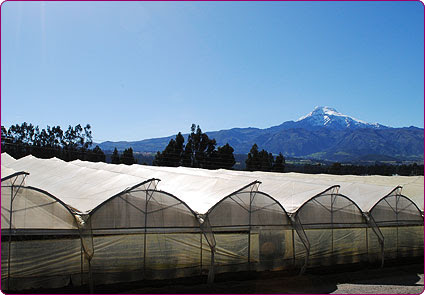
The majority of fresh-cut flowers are sourced internationally, from regions with optimal altitude, climate, and soil conditions that support consistent, high-quality production year-round.
Production is concentrated across key growing regions, each offering distinct advantages in terms of seasonality, varieties, and overall product characteristics. This geographic diversification plays a critical role in maintaining a stable and reliable supply throughout the year.
Access to multiple producing regions enables more precise sourcing decisions based on seasonality, variety performance, and market conditions.
What are the typical minimum order requirements for floral wholesalers?
Minimum order requirements vary by supplier type. Local wholesalers typically sell by the bunch, allowing smaller, flexible purchases. Larger distributors operate around box volumes to maintain efficiency in sourcing, packing, and logistics.
In practice, wholesale programs are structured around minimum box quantities rather than individual bunches. This directly impacts pricing, product selection, and how orders are fulfilled from farm to delivery.
The location of these hubs directly influences transit times, product freshness, and overall logistics costs. Understanding how flowers move through this system allows buyers to make more informed sourcing decisions, particularly when timing and quality are critical.
What Do You Need to Buy Wholesale?
Access to wholesale pricing, generally reserved for qualified trade buyers, is contingent upon meeting established account requirements.
The first is a registered business entity. This can be an LLC, a sole proprietorship, a corporation, or any other legally registered business structure in your state. The specific entity type matters less than having one on record.
The second is a resale certificate, sometimes called a seller's permit or resale number depending on the state. This document tells your supplier that you are purchasing goods for resale — meaning you will collect sales tax from your end customers, so you are not required to pay it at the time of purchase. Most states issue these through their Department of Revenue, and the process is generally straightforward.
If your business is not yet fully formalized, purchasing is still possible — sales tax simply applies to the order. This is a reasonable starting point while you get registered, though we always recommend getting your resale certificate in place early. The cost savings add up quickly.
Beyond the paperwork, the most useful thing you can bring to a first conversation with any wholesale supplier is a clear sense of your needs: your weekly volume, the types of flowers you use most, and where you are located. That information shapes everything — the account structure, the pricing, and the logistics plan.
How Are Wholesale Flowers Packaged and Sold?
Wholesale flowers are not sold by the stem. They move through the supply chain in standardized bunches and shipping boxes, and understanding this system is essential before placing your first order.
Bunches are the base unit. Roses typically come in bunches of 25 stems. Carnations in 25. Lilies in 10. Alstroemeria in 10. The exact count varies by variety and farm, and your account manager will always specify the count for each item on an order.
Those bunches travel in export boxes, which come in four standard sizes:
| Format | What it means | Best suited for |
|---|---|---|
| FBFull Box | The maximum volume — the standard farm export unit | High-volume orders of a single variety |
| HBHalf Box | Half a full box — the most common format | Mixed variety orders, mid-size studios |
| QBQuattro Box | A quarter of a full box | Smaller weekly orders, testing new varieties |
| EBEighth Box | The smallest available format | First orders, boutique studios, sampling |
When planning an order, think in boxes and bunches rather than individual stems. The math can feel unfamiliar at first, but it becomes instinctive quickly. Any good account manager will walk you through the quantities on your first few orders.
How Does Wholesale Flower Pricing Work?
Wholesale flower prices are not fixed. They move based on a combination of factors that are worth understanding before you place your first order — and before you build a budget.
A premium long-stem Ecuadorian rose commands a different price than a standard Colombian stem. Grade is determined by stem length, head size, and uniformity.
Dutch tulips cost more than Chilean. Ecuadorian roses more than Colombian. The premium usually reflects real differences in quality and growing conditions.
Valentine's Day, Mother's Day, and wedding season create significant demand spikes. Prices during these windows can be dramatically higher than the rest of the year.
Consistency and volume are rewarded. A buyer who orders the same product every week is a different kind of customer than someone placing a one-off order — and is priced accordingly.
Freight is a real component of your total cost, and it varies significantly by location. A buyer in Miami pays very different freight than a buyer in Seattle or Chicago.
The most effective tool for locking in favorable pricing across all of the above — especially during peak seasons. Covered in detail in the next section.
One thing worth noting: the total cost of a wholesale flower order is the sum of product cost and logistics. Both numbers matter, and any reputable supplier should be transparent about both from the outset.
Standing Orders: The Professional Standard

A standing order is a recurring weekly purchase that remains consistent in product, quantity, and price throughout the year. You establish the parameters once — the varieties, volumes, and delivery schedule — and the order runs automatically each week.
For any buyer with consistent, predictable needs, this is the most rational way to buy. Here is why:
Your per-stem rate is fixed at the beginning of the year. Market fluctuations, seasonal demand spikes, and supply disruptions do not affect your price. You know exactly what you are paying, every week.
Valentine's Day and Mother's Day are the two most demanding days in the floral calendar. Supply gets tight and prices rise sharply. Standing order clients receive their full allocation at their locked rate — the same price they have had all year. Buyers purchasing on the open market during these windows face significantly higher costs and uncertain supply.
At Blossom Express, standing order clients receive direct accounts at the farms we source from. This means you build a genuine purchasing record with specific farms — which translates into preferential treatment, early access to new varieties, and better allocations over time. We do not obscure our farms. We connect you directly to them.
Core products arrive automatically each week. Time spent placing routine orders can be redirected to design, client relationships, and growing the business.
How Event Sourcing Works
Event sourcing follows a different logic than everyday wholesale buying. Each order is tied to a specific palette, scale, date, and installation schedule — not to a standing product list.
Because of this, the process is usually built around planning, alignment, and timing rather than simple product selection.
The process typically follows five stages:
Photography references, mood boards, color palettes, and venue details establish the starting point. The clearer the brief, the more accurate the sourcing plan can be.
A sourcing list is built around the palette, combining flowers, foliage, and supporting elements with options across different price points and availability levels.
We send a detailed quote. You add, remove, substitute, or adjust quantities. This goes back and forth until the order reflects exactly what you need.
Sourcing, packing, transit, and delivery timing are coordinated around the installation schedule, with the event date serving as the fixed point for execution.
Event orders rarely move from concept to confirmation in a single step. Revisions are a normal part of aligning palette, quantities, substitutions, and budget.
Live Inventory Access via Komet Sales
Real inventory. Real prices. Any time of day.
Browse, select, and plan orders at midnight if you need to — not when your supplier happens to be available.
Platform is always live, regardless of business hours.
Real-time visibility into available product across the sourcing network — updated as supply changes.
Curated availability sent to your inbox every week.
Open market represents active farm production available for purchase. Availability is updated in real time, with pricing driven by market conditions.
Logistics and the Cold Chain
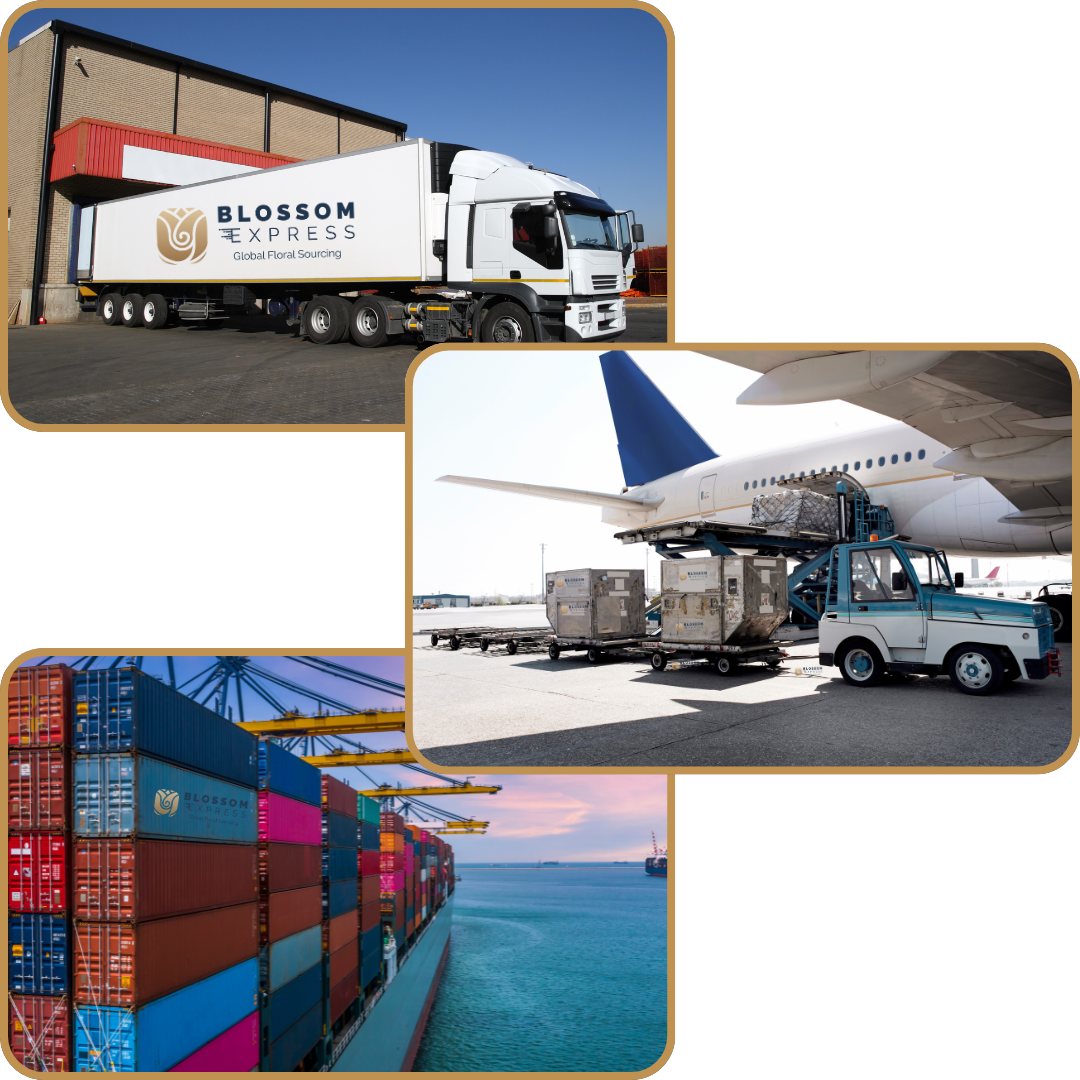 Our sourcing partners in Ecuador.
Logistics is the most underestimated part of buying wholesale flowers. It is also where the most expensive mistakes happen — and where the gap between good suppliers and great ones is most visible.
Understanding the basics protects you as a buyer.
Fresh flowers are perishable from the moment they are cut. Any break in temperature during transit reduces vase life. Cold chain management directly determines product quality upon arrival.
Wholesale pricing may be consistent, but total cost is not. Freight varies by location and must be evaluated separately to understand true landed cost.
International shipments follow fixed flight schedules. Order timing must align with these routes to ensure arrival two or more days before use.
Delays can occur due to weather, customs, or missed connections. Reliable execution depends on proactive communication before issues impact delivery.
Before Your First Order
Most first-time wholesale buyers are better prepared than they think. Having the following in place — or at least in progress — is enough to open an account and begin the conversation with any reputable supplier:
LLC, sole proprietorship, corporation — the structure matters less than having something on record in your state.
Issued by your state's Department of Revenue. Enables tax-exempt wholesale purchasing. Apply early — the savings justify the effort.
Even a rough estimate — how many arrangements per week, how many events per month — shapes the account structure your supplier will recommend.
Your state, your studio address, and whether you have refrigerated receiving capacity. These details affect delivery options and freight calculations from the first order.
For event planners or design-forward studios — even a Pinterest board or a handful of saved images communicates more than a verbal brief. Bring what you have.
The rest — the specifics of varieties, grades, standing order structure, and credit terms — is what the first conversation is for.
"The best sourcing relationships are built on transparency. The more clearly you can describe what you need, the better the answer you will receive."